Indonesia Travel Guide
Ancient temples, a volcano that glows blue at night, a savanna straight out of Africa, and a 200-meter waterfall — here's your guide to the most popular tourist destinations Java and Jakarta have to offer, all in one place.
Java Indonesia Travel Guide: Best Places to Visit
Looking for an unforgettable Java Indonesia travel experience? Java offers ancient temples, spectacular volcanoes, beautiful landscapes, and authentic Javanese culture.
Best Places to Visit in Java Indonesia
Yogyakarta
Yogyakarta is one of the best places to visit in Java. Explore traditional Javanese culture, Borobudur Temple, Prambanan Temple, local markets, and delicious Indonesian food.
Mount Bromo
Mount Bromo is one of the most famous attractions in East Java. Watching the sunrise over the volcanic landscape is a must-do experience for travelers visiting Java.
Ijen Crater
Ijen Crater is famous for its turquoise crater lake and unique volcanic scenery. It is often combined with Mount Bromo as part of a Bromo Ijen tour.
Dieng Plateau
Dieng offers cool mountain air, volcanic landscapes, lakes, temples, and beautiful countryside. It is a great choice for travelers looking for a quieter side of Java.
Karimunjawa
For beaches and snorkeling, visit Karimunjawa. This beautiful island destination is perfect for relaxing after exploring Java’s mountains and temples.
Things to Do in Java Indonesia
Some of the best experiences include:
– Watch sunrise at Mount Bromo
– Visit Borobudur and Prambanan
– Explore Yogyakarta
– Hike Ijen Crater
– Try traditional Javanese food
– Travel through Java by train
– Experience local villages and culture
– Relax on the beaches of Karimunjawa
Travel to Java Indonesia
Java is an excellent destination for travelers who want to experience Indonesia beyond Bali. From ancient temples and traditional culture to spectacular volcanoes and tropical beaches, Java offers a wide variety of experiences.
Whether you are interested in Java Indonesia backpacking, volcano tours, cultural experiences, or a Bali and Java trip, the island offers something for every traveler.
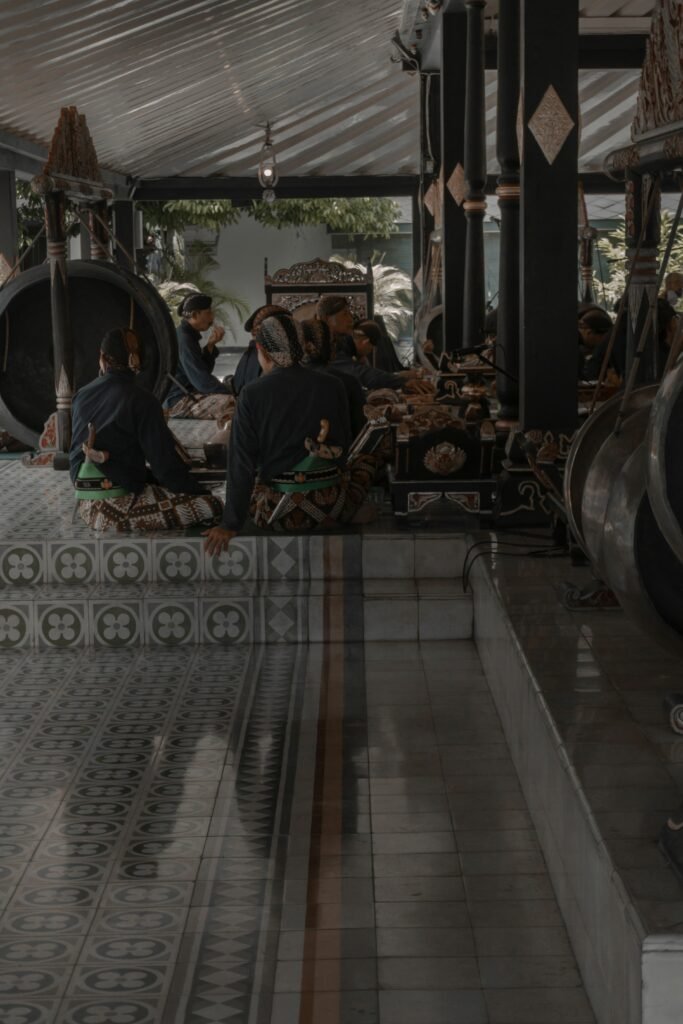
Traditional Javanese culture is one of the most distinctive cultural traditions in Indonesia. For travelers exploring Java, experiencing Javanese traditional arts, music, dance, and local customs offers a deeper understanding of the island’s history and identity.
From Wayang Kulit and Javanese dance to gamelan music and traditional ceremonies, Java has a rich cultural heritage that has been preserved for generations.
Wayang Kulit – Traditional Javanese Shadow Puppetry
Wayang Kulit is one of the most famous forms of Javanese traditional art.
The performance uses intricately carved leather puppets placed behind a screen and illuminated by a light. A puppeteer, known as a dalang, controls the characters while telling stories inspired by ancient epics and Javanese traditions.
A Wayang Kulit performance is not only entertainment. It can also convey moral values, philosophy, and lessons about human life.
Javanese Traditional Dance
Javanese dance is known for its graceful movements, controlled gestures, and elegant style.
Traditional dances are often performed at cultural events, royal ceremonies, celebrations, and artistic performances.
Some well-known forms include Bedhaya, Srimpi, Gambyong, and various regional dances from Central and East Java.
For visitors, watching a traditional Javanese dance performance is an excellent way to experience the artistic heritage of Java.
Gamelan Music
Javanese Gamelan is a traditional musical ensemble featuring instruments such as gongs, metallophones, drums, and other percussion instruments.
Gamelan music often accompanies Wayang Kulit, traditional dance, ceremonies, and cultural performances.
The distinctive sound of gamelan is an important part of Javanese culture and can be experienced in Yogyakarta, Surakarta, and other cultural centers across Java.
Javanese Traditional Ceremonies
Traditional ceremonies are another important part of Javanese culture.
Many ceremonies are connected with important moments in life, community traditions, and local beliefs. These practices vary between regions and communities.
Visitors should observe ceremonies respectfully, especially when attending events that are primarily religious or community occasions rather than tourist performances.
Javanese Traditional Houses and Architecture
Traditional Javanese architecture can also be seen in villages, historic residences, royal complexes, and cultural sites.
The Joglo house, recognizable by its distinctive roof structure, is one of the best-known examples of traditional Javanese architecture.
These buildings reflect traditional ideas about family, community, space, and social life.
Batik and Traditional Crafts
Javanese batik is another important part of the island’s cultural heritage.
Traditional batik is made using wax and dye to create detailed patterns. Yogyakarta and Surakarta are particularly well known for their batik traditions.
Visitors can explore traditional workshops and see how artisans create batik by hand.
Where to Experience Javanese Culture
Travelers interested in traditional Javanese culture can explore cultural destinations such as:
– Yogyakarta – traditional arts, Wayang Kulit, dance, batik, and cultural performances
– Surakarta (Solo) – Javanese dance, gamelan, batik, and palace traditions
– Central Java villages – traditional community life and local arts
– East Java – distinctive regional dances, performances, and cultural traditions
Experience Traditional Javanese Arts
For travelers planning a Java Indonesia travel experience, discovering Javanese arts can be just as memorable as visiting temples and volcanoes.
Watching Wayang Kulit, listening to Javanese Gamelan, seeing traditional dance, visiting a batik workshop, and exploring traditional architecture provide opportunities to experience the cultural heritage of Java.
Traditional Javanese culture is not simply part of the island’s history. It continues to live through artists, musicians, dancers, craftspeople, families, and communities across Java.
The History of Borobudur Temple: A Journey Through Indonesia’s Ancient Buddhist Heritage
Borobudur Temple is one of the most remarkable Buddhist monuments in the world. Located in Central Java, Indonesia, this enormous stone monument attracts travelers, historians, archaeologists, and Buddhist pilgrims from around the world.
But what is the history of Borobudur Temple? Who built it, why was it constructed, and how did this ancient monument become one of Indonesia’s most important cultural landmarks?
This article explores the fascinating history of Borobudur Temple, from its construction in ancient Java to its rediscovery and restoration.
Where Is Borobudur Temple?
Borobudur Temple is located in the Kedu Valley of Central Java, Indonesia, near the city of Magelang and approximately 40 kilometers from Yogyakarta.
The monument stands in a landscape surrounded by mountains and volcanoes, including Mount Merapi, Mount Merbabu, and the Menoreh Hills.
Today, Borobudur is part of the Borobudur Temple Compounds, which also includes the nearby Mendut and Pawon temples. UNESCO added the complex to the World Heritage List in 1991.
When Was Borobudur Temple Built?
The Borobudur Temple history dates back to the 8th and 9th centuries CE.
According to UNESCO, the monument was built during the reign of the Syailendra Dynasty, a powerful dynasty associated with Buddhism in ancient Java. The exact date of construction and the identity of the individual who ordered its construction are not known with certainty.
Indonesian tourism sources generally place its construction around 780–840 CE.
Rather than being a conventional temple with large interior rooms, Borobudur was designed as a massive three-dimensional Buddhist monument. Its architecture represents Buddhist ideas about the universe and the spiritual journey toward enlightenment.
Why Was Borobudur Temple Built?
The original purpose of Borobudur is closely connected with Mahayana Buddhism.
UNESCO describes the monument as reflecting Buddhist cosmology. Its structure is divided into three symbolic levels:
– Kamadhatu – the world of desire
– Rupadhatu – the world of forms
– Arupadhatu – the formless world
The journey through the monument can therefore be understood as a symbolic movement from the ordinary human world toward spiritual liberation.
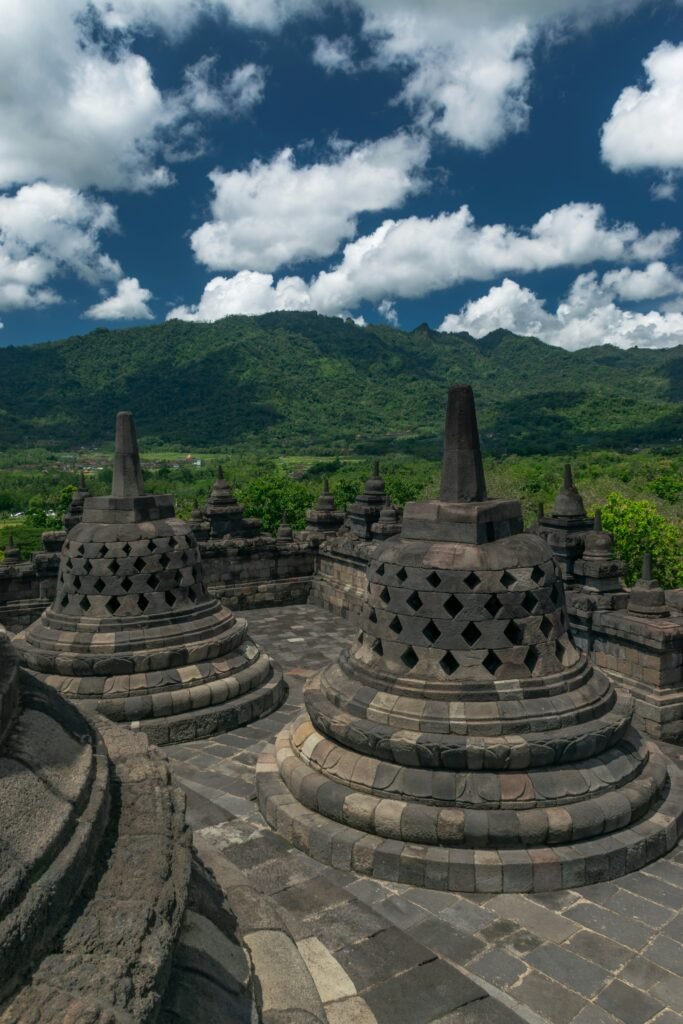
The monument is also arranged around a central stupa and contains numerous smaller stupas and Buddha statues, creating an extraordinary combination of architecture, sculpture, and religious symbolism.
The Architecture of Borobudur Temple
One of the reasons Borobudur Temple Indonesia is so famous is its extraordinary architecture.
The monument consists of several levels. UNESCO describes a pyramidal base with five square terraces, followed by three circular platforms and a monumental stupa at the top.
The upper circular terraces contain 72 perforated stupas, each associated with a Buddha statue. At the center stands the large main stupa.
The walls and balustrades are covered with thousands of carved panels. These reliefs are not simply decorative. They communicate Buddhist teachings and stories through visual narratives.
The Reliefs of Borobudur
The reliefs are among the most important features of Borobudur.
The monument contains approximately 2,672 relief panels, including narrative and decorative reliefs. They depict subjects connected with Buddhist teachings, the life of Buddha, moral stories, and the spiritual journey toward wisdom.
Some important narrative traditions represented at Borobudur include:
Lalitavistara
These reliefs portray important episodes from the life of Siddhartha Gautama and his journey toward becoming the Buddha.
Jataka and Avadana
These stories communicate moral lessons through accounts of previous lives and acts of virtue.
Gandavyuha
This narrative follows Sudhana as he searches for wisdom and spiritual understanding.
For visitors interested in ancient history, Buddhist culture, and Asian art, the reliefs provide an extraordinary visual record of life and religious ideas in ancient Java.
What Happened to Borobudur?
After centuries as an important Buddhist monument, Borobudur was eventually abandoned sometime between the 10th and 15th centuries, according to UNESCO.
The reasons for its abandonment are not completely established.
It is sometimes said that Borobudur was buried because of a major eruption of Mount Merapi. However, available evidence does not establish volcanic activity as the single or definitive reason why the monument was abandoned.
Over the centuries, vegetation grew around the monument and parts of it became covered by soil and debris. Borobudur gradually disappeared from wider knowledge.
The Rediscovery of Borobudur in 1814
A major chapter in the history of Borobudur Temple began in the early 19th century.
In 1814, during the British administration of Java, Thomas Stamford Raffles received information about a large ancient monument in the Magelang area. He ordered an investigation, and H.C. Cornelius was tasked with clearing the site.
The rediscovery brought Borobudur to wider international attention.
Raffles later included information about Borobudur in his book The History of Java, first published in 1817.
However, it is important to note that knowledge of the monument had not completely disappeared among local communities. Historical Indonesian sources had mentioned Borobudur before the 1814 rediscovery.
The Restoration of Borobudur Temple
After its rediscovery, Borobudur required extensive conservation.
One important restoration took place between 1907 and 1911, led by Dutch engineer Theodoor van Erp. Further conservation followed over the decades.
The largest modern restoration took place from 1973 to 1983, through cooperation between the Indonesian government and UNESCO. The project involved dismantling and rebuilding sections of the monument, improving drainage, and conserving the stone structure.
This restoration helped protect Borobudur for future generations.
Borobudur Becomes a UNESCO World Heritage Site
In 1991, the Borobudur Temple Compounds were inscribed on the UNESCO World Heritage List.
UNESCO recognizes Borobudur for its outstanding universal value as a masterpiece of Buddhist architecture and monumental art. The site also demonstrates important cultural and architectural developments in Southeast Asia.
Today, Borobudur is not only an archaeological monument but also an important Buddhist religious site.
Borobudur Temple Today
Today, Borobudur Temple is one of Indonesia’s best-known cultural destinations.
Visitors can explore its terraces, study its ancient reliefs, admire the Buddha statues and stupas, and learn about the history of Buddhism in Java.
The monument also remains significant for Buddhist communities. Borobudur is associated with the celebration of Waisak, an important Buddhist religious festival.
For international travelers, particularly those interested in history, architecture, religion, and cultural heritage, Borobudur offers an opportunity to experience a monument that connects ancient Javanese civilization with the wider history of Buddhism in Asia.
Why Is Borobudur Temple Important?
The importance of Borobudur goes far beyond its enormous size.
It represents the achievements of ancient Javanese architecture, Buddhist philosophy, stone carving, and artistic expression.
Its thousands of relief panels provide valuable insight into the religious and cultural world of ancient Java, while its architectural design expresses Buddhist ideas through physical space.
For these reasons, the history of Borobudur Temple remains an important subject for travelers and researchers around the world.
Final Thoughts
The history of Borobudur Temple is a story of construction, religious devotion, abandonment, rediscovery, restoration, and preservation.
Built in Central Java more than a thousand years ago, Borobudur survived centuries of change before becoming internationally recognized as a UNESCO World Heritage Site.
Today, the Borobudur Temple Indonesia experience offers much more than sightseeing. Its stupas, Buddha statues, and intricate reliefs provide a window into the history and spiritual traditions of ancient Java.
For anyone exploring Indonesia’s cultural heritage, Borobudur is a remarkable place where history, Buddhism, architecture, and art come together in one extraordinary monument.
Frequently Asked Questions About Borobudur Temple
When was Borobudur Temple built?
Borobudur was built during the 8th and 9th centuries CE, during the period of the Syailendra Dynasty.
Where is Borobudur Temple located?
Borobudur is located in the Kedu Valley of Central Java, Indonesia, near Magelang and Yogyakarta.
Why is Borobudur famous?
Borobudur is famous for its monumental Buddhist architecture, intricate reliefs, numerous Buddha statues, and its status as a UNESCO World Heritage Site.
When was Borobudur rediscovered?
The monument was investigated and cleared in 1814 during the British administration of Java, following information received by Thomas Stamford Raffles.
Is Borobudur a UNESCO World Heritage Site?
Yes. The Borobudur Temple Compounds were inscribed on the UNESCO World Heritage List in 1991.
How many stupas are at Borobudur?
The three upper circular platforms contain 72 perforated stupas surrounding the central main stupa.
Tourist Transportation
Tourism Consultation
Professional Driver
© 2026 Created with Hellojavatravel